

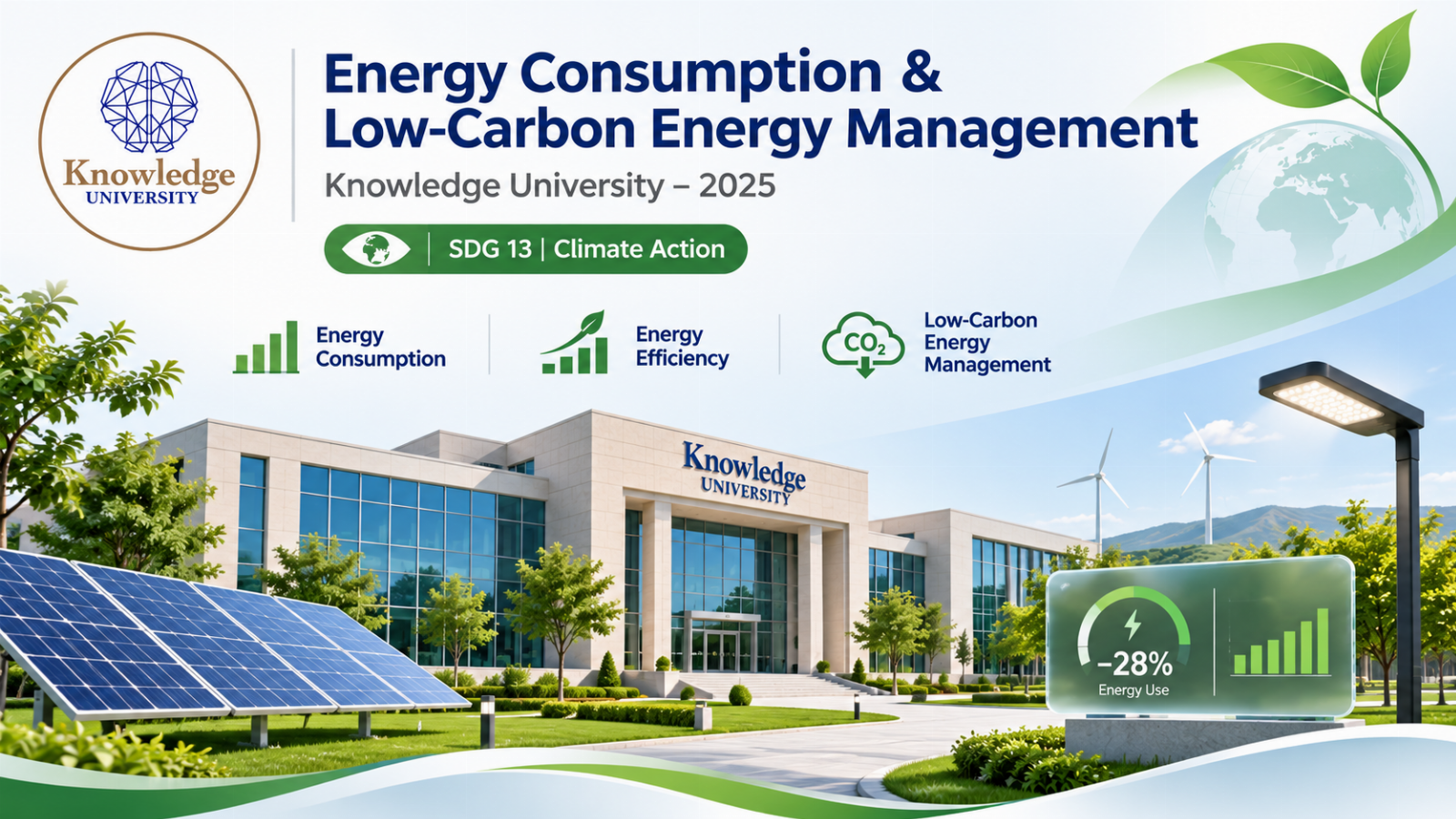
Energy Consumption, Energy Efficiency and Low-Carbon Energy Management at Knowledge University – 2025
Knowledge University | Campus Sustainability and Environmental Management
SDG 13 – Climate Action
Knowledge University is committed to promoting sustainable energy management, improving energy efficiency, supporting renewable energy technologies, and reducing the environmental impacts associated with university operations.
Throughout 2025, the university continued advancing its environmental sustainability objectives through sustainable building standards, renewable-energy education, scientific research, institutional cooperation, and responsible energy-management practices.
These initiatives contribute to the university's commitment to the United Nations Sustainable Development Goal 13 (Climate Action).
1. Campus Energy Consumption and Management
Knowledge University recognizes the importance of responsible energy consumption across its academic, administrative, and operational facilities.
Energy is used throughout the university for educational activities, laboratories, lighting, heating, cooling, ventilation, information technology, and other campus services.
The university's energy-management framework considers the principal categories of energy consumption, including:
- Electricity purchased for university buildings and facilities.
- Electricity generated through university-controlled power systems.
- Fuel consumed by university-operated generators.
- Energy used by university-owned vehicles and equipment.
- Renewable and other qualifying low-carbon energy sources.
These categories form the basis for assessing institutional energy consumption and identifying opportunities to improve energy efficiency.
2. Sustainable Building Standards and Energy Efficiency
Knowledge University has established Sustainable Building Standards to promote energy-efficient infrastructure and environmentally responsible campus development.
The university's building sustainability requirements include:
- Energy-efficient LED lighting systems.
- Insulated building envelopes and glazing.
- Efficient heating, ventilation, and air-conditioning systems.
- Smart temperature-control considerations.
- Natural lighting and ventilation.
- Environmentally responsible construction materials.
The Facilities & Projects Directorate oversees the integration of relevant sustainability requirements into new building projects and major renovations.
These measures support the university's objectives of reducing unnecessary energy consumption and improving the environmental performance of campus infrastructure.
Supporting Evidence: Sustainable Building Standards at Knowledge University
3. Institutional Energy Monitoring and Low-Carbon Energy Assessment
Knowledge University recognizes the importance of evaluating energy consumption and distinguishing conventional energy sources from renewable and other qualifying low-carbon sources.
Institutional energy assessment involves reviewing energy supplied to and consumed across university facilities, including purchased electricity, university-generated electricity, and applicable fuel consumption.
For sustainability reporting, energy quantities are expressed in gigajoules (GJ), enabling comparison between different sources of energy.
The university's environmental management objectives include strengthening energy-data collection, improving resource efficiency, and supporting the transition toward lower-carbon energy systems.
4. Renewable Energy Education and Industry Collaboration – 2025
On 24 September 2025, Knowledge University signed a Memorandum of Understanding with Asman Solar Company to strengthen practical education and professional training in solar-energy technologies.
The cooperation addressed opportunities for students to gain theoretical and practical knowledge concerning solar-energy systems, including their installation, operation, and maintenance.
This initiative demonstrates the university's engagement with the renewable-energy sector and its commitment to preparing students for emerging technologies supporting sustainable development.
Supporting Activity: Knowledge University Partnership with Asman Solar Company
5. Scientific Research on Renewable and Low-Carbon Energy – 2025
Knowledge University researchers contributed to scientific research involving renewable-energy systems, energy efficiency, and sustainable electricity generation.
One relevant publication is:
"Enhanced Energy Efficiency in Small-Scale Power Generation Using a Hybrid Solar-Biomass System With Thermal Storage"
The research explores opportunities to improve energy-generation efficiency through the integration of renewable-energy technologies and thermal storage.
Such research contributes to scientific understanding of alternative energy systems and supports technological innovation in the field of low-carbon energy.
Research Evidence: View Scientific Publication
6. Environmental Sustainability and Energy Conservation
Knowledge University promotes responsible energy consumption as part of its wider environmental sustainability objectives.
Important priorities include:
- Promoting energy-efficient infrastructure and equipment.
- Encouraging responsible electricity consumption.
- Supporting the implementation of sustainable building standards.
- Strengthening awareness of renewable-energy technologies.
- Promoting scientific research on efficient and low-carbon energy systems.
- Encouraging continuous improvement in campus energy management.
- Supporting institutional cooperation with renewable-energy organizations.
These priorities contribute to responsible resource utilization and the university's long-term environmental sustainability objectives.
7. Contribution to Sustainable Development Goals
Knowledge University's sustainable infrastructure initiatives, renewable-energy education, scientific research, and energy-management objectives contribute to several Sustainable Development Goals.
- SDG 7 – Affordable and Clean Energy: Supporting renewable-energy education, energy efficiency, and clean-energy technologies.
- SDG 9 – Industry, Innovation and Infrastructure: Encouraging innovative and sustainable infrastructure development.
- SDG 12 – Responsible Consumption and Production: Promoting efficient utilization of energy resources.
- SDG 13 – Climate Action: Supporting energy efficiency, renewable-energy research, and environmentally responsible institutional operations.
- SDG 17 – Partnerships for the Goals: Strengthening cooperation with industry partners in the renewable-energy sector.
8. Continuing Commitment to Climate Action
Knowledge University remains committed to strengthening sustainability within its academic and operational activities.
Through sustainable construction standards, scientific research, renewable-energy education, and cooperation with external organizations, the university continues contributing to the development of energy-efficient technologies and environmental responsibility.
These efforts reflect Knowledge University's broader commitment to addressing climate change and supporting sustainable development in the Kurdistan Region of Iraq.
Reporting Year: 2025
Institution: Knowledge University, Erbil, Kurdistan Region, Iraq
Responsible Units: Facilities & Projects Directorate and Directorate of Quality Assurance & Accreditation
SDG Alignment: SDG 13 – Climate Action