طب الاسنان
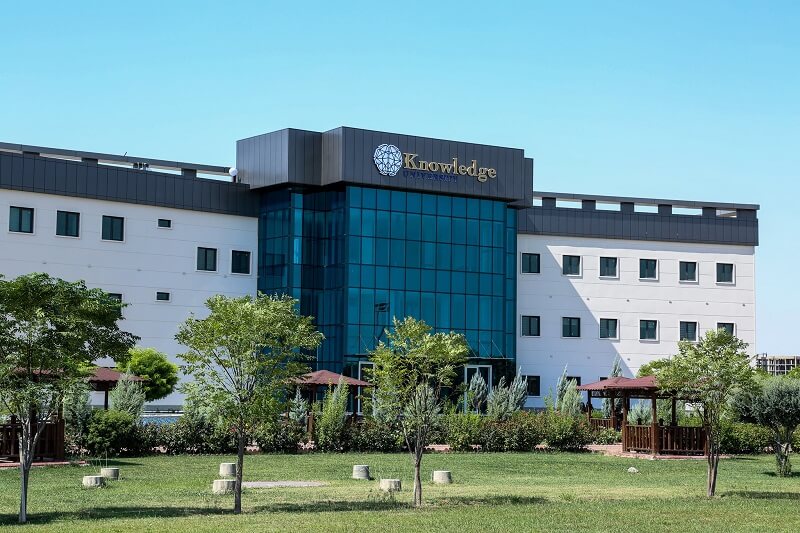
College of Dentistry
1. Overview of the College
The College of Dentistry at Knowledge University (KNU), Erbil, Kurdistan Region, Iraq, is committed to preparing competent, ethical, and compassionate dental professionals who contribute to improving oral health and the overall well-being of individuals and communities. The College provides a structured five-year undergraduate dental education program designed to integrate basic biomedical sciences, dental sciences, preclinical training, clinical practice, research, and professional development.
The educational program follows a progressive approach in which students develop foundational scientific knowledge before advancing to preclinical simulation and practical training, followed by supervised clinical experience. This progression aims to ensure that graduates can apply scientific principles to the prevention, diagnosis, and management of oral diseases and conditions while delivering safe, evidence-based, and patient-centered dental care.
The College is committed to student-centered learning, active participation, critical thinking, problem-solving, and lifelong learning. Teaching and learning activities include lectures, laboratory sessions, tutorials, simulation-based training, clinical practice, case-based discussions, independent study, and research activities. Assessment methods are intended to evaluate not only students’ theoretical knowledge but also their clinical skills, professional attitudes, communication abilities, and achievement of defined learning outcomes.
The College seeks to promote a culture of academic integrity, professional ethics, patient safety, infection prevention and control, interdisciplinary collaboration, and continuous quality improvement. It also emphasizes the importance of community oral health, preventive dentistry, research, and the responsible use of contemporary dental technologies.
In alignment with the principles of the Bologna Process and the European Credit Transfer and Accumulation System (ECTS), the College aims to define educational achievement through measurable learning outcomes and student workload. Curriculum development and evaluation should ensure appropriate alignment between course learning outcomes, program learning outcomes, teaching and learning activities, assessment strategies, and the competencies expected of a dental graduate.
Through continuous curriculum review, faculty development, clinical supervision, and quality assurance, the College strives to graduate dental professionals who are prepared to meet applicable national requirements and to pursue further professional development in accordance with relevant professional regulations.
2. Educational Philosophy
The College adopts a competency-based, student-centered educational philosophy that emphasizes the integration of knowledge, practical skills, professional attitudes, and ethical values. Learning is designed to progress from foundational understanding to the application of knowledge in simulated and clinical environments.
The educational approach is based on the following principles:
- Integration of basic and clinical sciences: Students connect biomedical and dental science knowledge with clinical reasoning and patient care.
- Progressive clinical competence: Students develop practical abilities through simulation, supervised clinical practice, feedback, and reflective learning.
- Patient-centered care: Patients are treated with dignity, respect, compassion, and consideration of their needs, preferences, rights, and circumstances.
- Evidence-based dentistry: Students learn to evaluate scientific evidence and apply it appropriately to clinical decision-making.
- Professionalism and ethics: Students demonstrate integrity, accountability, confidentiality, and respect for professional and legal responsibilities.
- Prevention and community engagement: Students recognize the importance of oral health promotion, disease prevention, and equitable access to oral healthcare.
- Lifelong learning and quality improvement: Graduates are encouraged to evaluate their own performance, identify learning needs, and continuously improve their professional practice.
3. Program Learning Outcomes (PLOs)
Upon successful completion of the five-year undergraduate dental program, graduates are expected to demonstrate the following learning outcomes.
PLO 1: Biomedical and Dental Scientific Knowledge
Integrate knowledge of biomedical, behavioral, and dental sciences to explain normal oral and systemic function and the causes, development, and consequences of oral and dental diseases.
PLO 2: Patient Assessment and Diagnosis
Obtain relevant medical, dental, and social histories; perform appropriate extraoral and intraoral examinations; interpret relevant diagnostic findings; and formulate differential and provisional diagnoses within the graduate dentist’s scope of practice.
PLO 3: Treatment Planning and Clinical Decision-Making
Develop evidence-based, patient-centered treatment plans that consider the patient’s oral and general health, clinical findings, preferences, risks, needs, and available treatment options, seeking consultation or referral when appropriate.
PLO 4: Clinical and Technical Competence
Demonstrate the practical and clinical skills required for the prevention and management of common oral and dental conditions, including appropriate procedures in restorative dentistry, endodontics, periodontology, prosthodontics, pediatric dentistry, orthodontic assessment, oral surgery, and oral radiology, within the graduate’s competence and applicable regulations.
PLO 5: Prevention and Oral Health Promotion
Apply preventive dentistry principles and communicate effective oral health promotion strategies to individuals, families, and communities, considering behavioral, social, cultural, and environmental factors that influence oral health.
PLO 6: Patient Safety and Infection Prevention
Apply infection prevention and control protocols, occupational safety measures, radiation protection principles, medical emergency procedures, and relevant patient safety practices to reduce risks in dental care.
PLO 7: Communication and Interpersonal Skills
Communicate effectively, respectfully, and empathetically with patients, their families, colleagues, and other healthcare professionals, adapting communication to the patient’s needs and circumstances and obtaining informed consent where required.
PLO 8: Professionalism, Ethics, and Legal Responsibility
Demonstrate ethical conduct, honesty, accountability, respect for patient autonomy, confidentiality, cultural sensitivity, and compliance with applicable professional, legal, and regulatory requirements.
PLO 9: Evidence-Based Practice and Critical Thinking
Critically appraise scientific literature, integrate relevant evidence with clinical expertise and patient preferences, and use analytical and problem-solving skills to support appropriate dental care.
PLO 10: Research and Information Literacy
Demonstrate understanding of basic research methods, biostatistics, research ethics, and scientific communication; interpret research findings; and participate in appropriate scholarly activities to support the advancement of dental knowledge.
PLO 11: Teamwork and Interprofessional Collaboration
Work effectively and respectfully with dental team members and other healthcare professionals, recognizing professional roles and contributing to coordinated care and improved patient outcomes.
PLO 12: Digital Literacy and Contemporary Dental Practice
Use appropriate digital information resources and contemporary dental technologies to support learning, documentation, diagnostic processes, communication, and clinical practice while maintaining patient confidentiality and data security.
PLO 13: Reflective Practice and Lifelong Learning
Evaluate personal performance, respond constructively to feedback, recognize limitations, identify continuing professional development needs, and demonstrate commitment to lifelong learning and improvement of clinical practice.
PLO 14: Community Responsibility and Public Health
Recognize oral health needs at the population level and contribute to oral health surveys, preventive initiatives, health education, and community-based activities that promote equitable access to oral healthcare.
4. Alignment of Learning Outcomes with Assessment
The achievement of program learning outcomes should be evaluated through a combination of assessment methods selected according to the nature of each outcome.
| Assessment method | Main outcomes assessed |
| Written examinations and structured tests | PLO 1, 3, 5, 9, 10 |
| Practical and laboratory examinations | PLO 1, 4, 6, 12 |
| Objective Structured Clinical Examinations (OSCEs) | PLO 2, 3, 4, 6, 7, 8 |
| Direct observation of clinical procedures | PLO 2, 3, 4, 6, 7, 8 |
| Clinical logbooks and competency records | PLO 2, 3, 4, 5, 6, 11 |
| Case presentations and treatment planning | PLO 1, 2, 3, 7, 9 |
| Research projects and written reports | PLO 9, 10, 12, 13 |
| Reflective portfolios and supervisor feedback | PLO 8, 11, 13 |
| Community oral health projects | PLO 5, 7, 11, 14 |
Assessment should use clearly defined criteria and appropriate rubrics. Clinical competence should be documented through direct observation, clinical records, feedback, and approved competency requirements rather than inferred solely from written examination results.
5. Curriculum Monitoring and Continuous Improvement
The College should periodically evaluate the effectiveness of its curriculum by reviewing student achievement, clinical competency records, assessment results, student and patient feedback, graduate performance, faculty evaluations, and relevant accreditation requirements.
Each course should have approved course learning outcomes (CLOs) that contribute to one or more program learning outcomes. A formal curriculum mapping matrix should demonstrate the relationship between CLOs, PLOs, teaching and learning activities, assessment methods, clinical competencies, and assigned ECTS workload.
The results of these evaluations should inform documented improvement plans, implementation responsibilities, timelines, and subsequent reviews. This process supports transparency, accountability, educational effectiveness, and continuous enhancement of the quality of dental education.
6. Expected Graduate Profile
Graduates of the College of Dentistry are expected to be scientifically knowledgeable, clinically competent within the scope of their education and authorization, ethically responsible, effective communicators, safety-conscious practitioners, and committed to evidence-based care and lifelong learning. They should be prepared to provide preventive and basic comprehensive dental care appropriate to their competence, recognize conditions requiring specialist management, and refer patients when necessary.
The College aims to develop graduates who contribute positively to the oral health of the Kurdistan Region and Iraq and who are prepared for further professional development in accordance with applicable national requirements and professional regulations.
Vision
To be a leading dental education institution in the Kurdistan Region and Iraq, recognized for excellence in competency-based dental education, patient-centered clinical care, research, innovation, and community engagement, while preparing graduates to meet national and international standards of oral healthcare.
The vision of College of Dentistry in Knowledge University is generally aimed at shaping the future of dental education and healthcare:
1. Leadership in Dental Education:
To be recognized as a leader in dental education, known for producing highly skilled, ethical, and socially responsible dental professionals who will contribute to the advancement of oral health globally.
2. Advancing Dental Research:
To be at the forefront of dental research and innovation, with faculty and students engaging in pioneering studies that push the boundaries of dental science and improve patient care outcomes.
3. Global Outreach and Collaboration:
To foster a global network of collaboration in dental education, research, and clinical practice, ensuring the college's contributions extend beyond local and national boundaries.
4. Comprehensive Care for All:
To build a healthcare environment that provides accessible and affordable dental care, ensuring that high-quality oral health services are available to all segments of society, especially the underserved.
5. Commitment to Holistic Patient Care:
To promote a holistic approach to patient care, integrating the latest technologies, treatment methods, and preventive strategies for long-term oral health and well-being.
Mission
The College of Dentistry is committed to preparing competent, ethical, compassionate, and lifelong-learning dental professionals through student-centered and evidence-based education, integrated theoretical and clinical training, innovative teaching, and meaningful research.
The College strives to:
- Provide a comprehensive, competency-based dental education aligned with national and international standards.
- Develop graduates who possess the knowledge, clinical skills, professional attitudes, ethical values, and communication skills required for safe and effective patient care.
- Provide patient-centered clinical training that emphasizes prevention, diagnosis, treatment, oral health promotion, patient safety, and quality of care.
- Foster evidence-based practice, critical thinking, research, innovation, and lifelong professional development.
- Promote interdisciplinary learning and collaboration within healthcare teams.
- Serve the community through oral health education, preventive programs, and outreach activities, with particular attention to local and underserved populations.
- Maintain a culture of continuous quality improvement, academic integrity, professionalism, and accountability.
- Prepare graduates to contribute effectively to the advancement of dentistry locally, nationally, and internationally.
- Academic Staff:
1. Asst. Prof. Dr. Alan Hayder Mawlod
2. Lec. Dr. Mostafa Mohammed Husam
3. Asst. Prof. Dr. Lana Bahram Khidr
- Top Students:
1. Ahmed Sherzad (3rd Grade)
2.Hevin Nizar (3rd Grade)
3. Kani Dler (2nd Grade)
Updated on October 17th, 2026
The mission of College of Dentistry is typically centered on:
1. Providing Quality Education:
To provide a world-class dental education that prepares students to become competent and compassionate dental professionals capable of meeting the needs of society.
2. Advancing Knowledge and Research:
To foster a culture of research and continuous learning, encouraging faculty and students to engage in innovative research that advances dental science and contributes to the betterment of oral health care.
3. Promoting Clinical Excellence:
To offer a comprehensive clinical education where students develop practical skills under expert supervision, ensuring they are well-equipped to diagnose, treat, and manage various oral health conditions.
4. Serving the Community:
To contribute to the health and well-being of society through outreach programs, free dental camps, and preventive dental care initiatives for underserved populations.
5. Fostering Ethical Practices and Professionalism:
To instill high standards of ethics, professionalism, and integrity in students, ensuring they provide patient-centered care with a deep sense of responsibility.
Services Provided by the College of Dentistry:
1. Clinical Treatment Services:
- The College of Dentistry aims to provide real clinical treatment services under the supervision of specialized doctors, where students can practice their clinical skills in the college’s dental clinics. These services include:
- - Dental examinations
- - Treatment of cavities
- - Fing of teeth
- - Teeth cleaning
- - Treatment of gum diseaseill
2. Practical Training and Clinical Learning:
- Students will be trained on how to perform oral medical procedures through direct interaction with patients in a clinical setting, under academic supervision.
3. Consultation and Medical Guidance:
- The college provides consulting services for patients on how to maintain optimal oral health and offers guidance to students on best practices in the field of dentistry.
4. Preventive and Awareness Services:
- The college aims to organize awareness campaigns about the importance of oral health, as well as preventive programs for oral diseases like cavities and gum disease.
- Encourages patients to practice daily oral hygiene, including brushing teeth and using dental floss.
5. Specialized Clinics:
- The college has started establishing specialized clinics in specific fields such as oral surgery, orthodontics, and pediatric dentistry, where patients can receive specialized treatment at a reduced cost.
6. Community Services:
- The college organizes free or discounted dental screening campaigns in the community, particularly in underserved or remote areas.
- Participation in community health events to raise awareness about oral health.
- Training on New Technologies:
- The college uses the latest dental technologies and provides training programs on the use of advanced techniques, such as dental implants, medical imaging, and laser treatments.
- Emergency Dental Services:
- Provides emergency services for oral injuries, broken teeth, or severe dental pain.
- Psychological Consultation:
- The college offers psychological support services for patients suffering from dental anxiety or fear of dental procedures.
The College of Dentistry at Knowledge University aims to offer a comprehensive range of specialties, Below is an overview of the specialties the college intends to provide:
1. General Dentistry:
Involves the diagnosis and preventive treatment of oral health issues.
Procedures include treating cavities, filling teeth, treating gum disease, cleaning teeth, and other essential procedures.
2. Oral Surgery:
Includes surgeries to remove impacted teeth, jaw surgery, and other surgical procedures such as treating oral cysts and congenital deformities.
3. Orthodontics:
A specialty focused on diagnosing and treating dental and jaw irregularities, including the placement of braces and other orthodontic devices.
4. Pediatric Dentistry:
Specializes in treating dental issues for children, including preventive care and addressing problems related to the development of their teeth.
5. Cosmetic Dentistry:
Includes all procedures aimed at improving the appearance of the teeth and mouth, such as teeth whitening, cosmetic fillings, and porcelain veneers.
6. Periodontics:
Focuses on the treatment of gum disease and issues affecting the tissues surrounding the teeth, including treatments to maintain gum health and address periodontal infections and pockets.
7. Prosthodontics:
Deals with the restoration and replacement of missing teeth using bridges, dentures, dental implants, and other artificial teeth.
8. Sedation Dentistry:
Involves using various types of sedation to help patients relax or sleep during dental procedures, especially for those suffering from anxiety or fear of dental treatment.
9. Geriatric Dentistry:
Specializes in providing dental care for the elderly, addressing the changes that occur in the mouth and teeth as people age.
10. Dental Radiology:
Involves using X-rays and the latest imaging techniques to diagnose oral health conditions.
11. Advanced Dental Studies:
Includes advanced training programs for graduate students or dental specialists, covering new techniques and the treatment of complex dental cases.
Updated on October 13th, 2026
لم يتم نشر المنهج الدراسي بعد.
لم يتم نشر مخرجات التعلم بعد.
منشورات القسم
| التاريخ | الموضوع | الرابط |
|---|---|---|
| 2026-06-15 | second trial exam first grade second semester 2026 | إظهار |
| 2026-06-02 | second grade second trial exam schedule fourth semester | إظهار |
| 2026-06-02 | third grade second trial exam schedule sixth semester | إظهار |
| 2026-05-31 | Third Trial, 2nd and 4th Semester | إظهار |
| 2026-05-16 | final exam theory first gade second semester 2026 | إظهار |
| 2026-05-14 | Final Practical exam first grade 2nd sem. 2026 | إظهار |
| 2026-05-05 | final theory secons grade 4th semester exam 2026 | إظهار |
| 2026-04-28 | FINAL EXAM schedule third grade sixth SEMESTER EXAM 2025\\\\2026 | إظهار |
| 2026-04-28 | Midterm EXAM first grade second SEMESTER 2025\\\\2026 | إظهار |
| 2026-04-28 | FINAL EXAM SECOND GRADE FOURTH SEMESTER PRACTICAL EXAM 2025\\2026 | إظهار |
| 2026-02-18 | second grade midterm exam sixt semester 2026 | إظهار |
| 2026-02-18 | third grade midterm exam sixth semester 2026 | إظهار |
| 2026-02-11 | Final exam, first semester, first grade 2025\\2026 | إظهار |
| 2026-01-24 | schedule of fourth trial exam | إظهار |
| 2026-01-24 | schedule of fourth trial exam second grade | إظهار |
| 2026-01-13 | third grade sixth semester weekly schedule | إظهار |
| 2026-01-12 | first grade midterm exam 2026 | إظهار |
| 2026-01-12 | second grade weekly schedule fourth semester | إظهار |
| 2025-12-21 | Final Examinations Schedule (2nd Grade-3rd Semester) Second trial 2025-2026 and Third trial 2024-2025 | إظهار |
| 2025-12-21 | Final Examinations Schedule (Third Garde-Fifth Semester)Second Trial 2025/2026 | إظهار |
| 2025-11-29 | new final exam second grade schedule 2025 | إظهار |
| 2025-11-29 | new third grade final exam 2025 | إظهار |
| 2025-11-22 | FINAL EXAM FIRST SEMESTER THIRD GRADE / THEORY | إظهار |
| 2025-11-22 | FINAL EXAM FIRST SEMESTER THIRD GRADE / THEORY | إظهار |
| 2025-11-22 | FINAL EXAMINATION FIRST SEMESTER SECONS GRADE PRACTICAL | إظهار |
| 2025-11-22 | FINAL EXAMINATION FIRST SEMESTER SECONS GRADE THEORY | إظهار |
| 2025-06-03 | petition on the results of first trial, second grade students | |
| 2024-11-30 | schedule for second trial, third and fourth | إظهار |
| 2024-11-26 | final third semester practical exam | إظهار |
| 2024-11-26 | final theory exam third semester second grade | إظهار |
| 2024-11-16 | new weekly schedule | إظهار |
| 2024-11-10 | physiology lab | |
| 2024-10-15 | time of midterm exam | |
| 2024-10-14 | voting for selection of class representative for second grade students | |
| 2024-10-13 | schedule of first semester mid-term exam 2024-2024 | إظهار |
| 2024-10-09 | new weekly schedule first semester2024-2025 | إظهار |
| 2024-09-17 | weekly schedule 2024-2025 first semester | إظهار |
| 2024-09-14 | Lab uniform(scrub) color for the students 2024-2025 | |
| 2024-09-07 | Reference books for pre-prosthodontic complete denture third semester | |
| 2024-08-25 | medical Labs Safety instructions 2024-2025 | |
| 2024-08-25 | Dental Labs Safety instructions 2024-2025 | |
| 2024-08-24 | instruments and devices used in the dental lab for second grade | |
| 2024-08-24 | MATERIALS USED IN THE DENTAL LAB FOR SECOND GRADE | |
| 2024-08-18 | starting of the academic year 2024-2025 first semester |